
Articles
Sea Moss and Weight Management: What to Know
By Leanne & Tashan · Published
Sea moss comes up a lot in conversations about weight, metabolism and “eating better”. And because wellness trends tend to take on a life of their own online, you might have seen it described as if it can melt fat, flatten your stomach or transform your body all on its own.
That's not how we talk about it here — and for good reason.
Sea moss can be part of a balanced routine for some people. But it's not a weight-loss solution, a fat burner, or a shortcut around the things that actually matter: food, movement, sleep, stress and overall health. This guide explains what people usually mean when they talk about sea moss and weight, where the limits are, and how to approach it without the hype.
Sea moss is not a weight loss product
No single food, drink, gel or supplement can safely promise weight loss on its own — and sea moss is no different. Weight is shaped by many factors: what you eat, how you move, how you sleep, your stress levels, hormones, health conditions, medications, age and genetics all play a part.
Sea moss may fit into a balanced routine for some people. But it's the routine doing the work, not the sea moss itself.
Why sea moss gets connected with weight in the first place
Sea moss is a seaweed that naturally contains minerals and has a gel-like texture, making it easy to blend into everyday recipes — smoothies, oats, soups, and teas. Some people find that adding it to their meals helps them feel more intentional about what they're eating and encourages more consistent habits.
That kind of gentle structure can be genuinely useful. But it's worth being clear: a habit you enjoy keeping is very different from sea moss causing weight loss.
Sea moss is not a fat burner
You'll sometimes see claims like “burns belly fat”, “melts fat”, “speeds up weight loss” or “detoxes your body” attached to sea moss products. We'd encourage you to be cautious around language like that.
Those phrases may sound exciting, but they set unrealistic expectations and don't reflect how the body actually works. A better way to think about sea moss is as a versatile ingredient — one that can sit comfortably inside a balanced diet, rather than doing something dramatic on its own.
How sea moss gel fits into a balanced routine
Sea moss gel is simple to add to meals and drinks you already enjoy. A tablespoon blends easily into:
- Smoothies
- Overnight oats or porridge
- Juices and herbal teas
- Soups and sauces
If adding sea moss gel helps you build a more consistent morning routine, make homemade smoothies more often, or simply feel more considerate about your food choices, that's a real benefit. Just remember: the benefit is the routine. There's no magic in the spoon.
Sea moss is not an appetite suppressant
Sea moss has a gel-like texture, which is why it blends well into smoothies or porridge. That is a texture, not an effect on appetite, and we would not present it as one.
Sea moss should never be used to suppress appetite or replace proper meals. If you find yourself regularly skipping meals, severely restricting your food intake, or using wellness products to avoid eating, that's worth taking seriously and speaking with a healthcare professional about.
Sea moss is not a meal replacement
This one is important.
Sea moss gel is an addition to food, not a substitute for it. Your body needs enough calories, protein, carbohydrates, healthy fats, fibre, vitamins and minerals from a varied diet every day. A well-balanced smoothie with sea moss gel can be a satisfying breakfast or snack, but it shouldn't quietly become your main source of nutrition unless you're working with a qualified professional for a specific reason.
Sea moss in smoothies
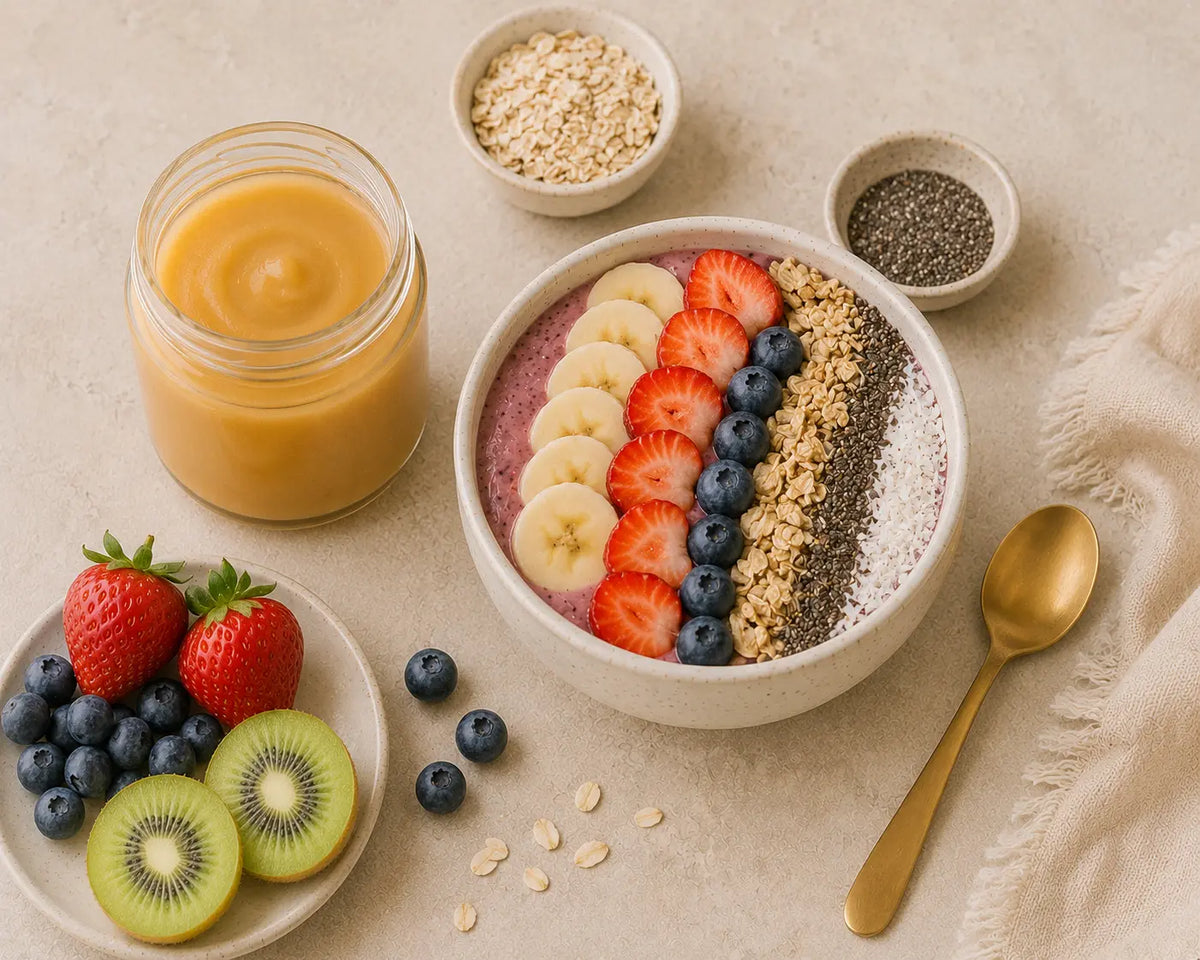
A smoothie made with fruit, a source of protein, healthy fats and a tablespoon of sea moss gel can be a satisfying, balanced option — much more so than a sugary snack or drink. That said, smoothies can also end up high in sugar or calories depending on what goes in, so it's worth keeping the ingredients balanced.
A few simple ideas to try:
- Add fruit for natural sweetness and flavour.
- Include yoghurt, seeds, nut butter or protein powder if you'd like it more filling.
- Use milk, plant milk, water or coconut water depending on your preference.
- Go easy on added sweeteners if the fruit is already doing that job.
- Start with around 1 tablespoon of sea moss gel.
How much sea moss gel should you use?
A common serving is around 1–2 tablespoons per day. Always check the guidance on your product label, and stick to it — more isn't automatically better.
Sea moss naturally contains minerals, including iodine, so using it in sensible amounts, rather than adding it to everything you eat, is the right approach.
Sea moss does not detox you
Your body already has well-established systems for processing and removing waste — your liver, kidneys, digestive system, and lymphatic system handle that work every day. Sea moss doesn't “detox” you, and we'd steer clear of any product or post that claims otherwise.
If you'd like to look after your general wellbeing, the fundamentals still go furthest: varied meals, good hydration, sleep, movement, fibre, and professional advice when you need it.
When weight-loss claims become a red flag
It's worth being cautious if a brand or post says sea moss will:
- Burn or melt belly fat.
- Guarantee weight loss.
- Replace meals.
- Detox or cleanse your body.
- Fix your metabolism.
- Work without any lifestyle changes.
- Help you lose a specific amount of weight in a short time.
Good wellness content should inform, not pressure you into believing one ingredient will change everything.
What actually makes the difference
Weight is personal and, for many people, genuinely complex. There's rarely one simple answer. That said, some helpful foundations for most people include:
- Eating regular, balanced meals.
- Including enough protein and fibre.
- Staying well hydrated.
- Moving in a way that suits your body and your life.
- Prioritising sleep.
- Managing stress where possible.
- Getting professional support for any medical or hormonal concerns.
Sea moss can sit inside that wider picture if it suits you. It just shouldn't be expected to replace it.
Who should be cautious with sea moss?
Sea moss may not be right for everyone. It's worth speaking to a qualified healthcare professional before using it regularly if you:
- Are pregnant or breastfeeding.
- Have a thyroid condition.
- Take regular medication.
- Use iodine or seaweed supplements.
- Have been advised to limit iodine.
- Have a history of disordered eating or restrictive dieting.
- Are using other products aimed at weight management.
Your health context matters far more than any trend.
Medical disclaimer
This article is for general information only and does not constitute medical advice. Sea moss should not be used to diagnose, treat, cure, prevent or manage weight loss or any medical condition. If you are pregnant, breastfeeding, taking medication, managing a thyroid condition, using iodine supplements, have a history of disordered eating, or are unsure whether sea moss is right for you, please speak to a qualified healthcare professional before using it regularly.
A realistic place in the routine
Sea moss can be a genuinely useful addition to a balanced lifestyle — in smoothies, oats, teas, soups and more. But it won't burn fat, replace meals, detox your body or do the heavy lifting of an entire lifestyle change.
It doesn't need dramatic claims to be worth using. It just needs a realistic place in your routine.