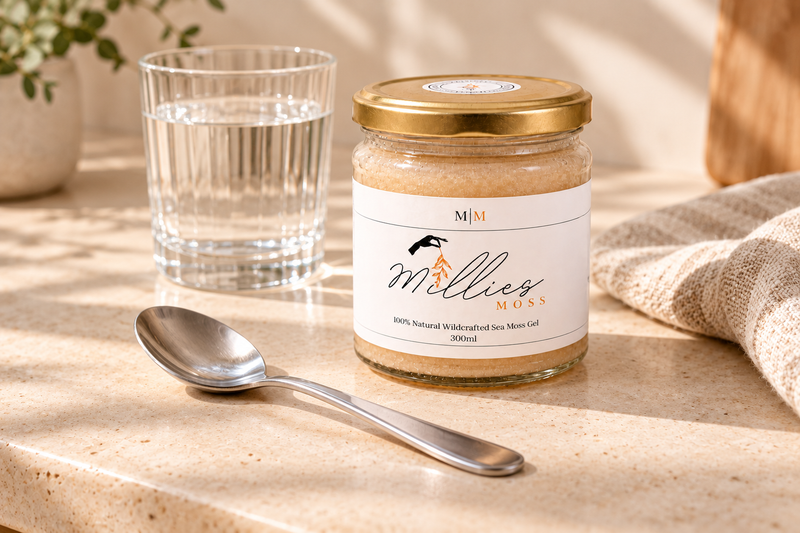
Sea moss comes up a lot in conversations about thyroid health, usually because it naturally contains iodine — a mineral the body needs to produce thyroid hormones.
That connection is real, but it is worth understanding properly. Thyroid health is nuanced; iodine levels in seaweed products can vary, and more is not always better. Here is a straightforward look at what reputable health guidance suggests, who should take extra care, and when to speak to a professional.
What does the thyroid actually do?
The thyroid is a small gland in the neck. It produces hormones that play a role in metabolism, energy, temperature regulation and several other important body functions.
Like most things in the body, it works best in balance. Too little or too much thyroid hormone can cause symptoms, and both need proper medical support rather than self-management.
Why does iodine matter?
Iodine is a mineral the body uses to make thyroid hormones. Getting enough of it matters — particularly during pregnancy and early development.
However, too much iodine can also affect how the thyroid works. The NHS notes that taking high doses of iodine over a long period can change the way the thyroid gland works, and the British Dietetic Association advises avoiding excessive iodine intake.
This is why context matters when it comes to iodine-containing products.
Does sea moss contain iodine?
Yes. Sea moss is a seaweed, and seaweeds naturally contain iodine.
The exact amount can vary depending on the type of seaweed, where it was grown, how it was harvested and how it was processed. This means you cannot assume every sea moss product contains the same amount, which is one reason why product transparency matters.
Can sea moss support thyroid health?
This is where careful wording is important.
Sea moss contains iodine, and iodine is involved in normal thyroid hormone production. That is true. But it does not automatically follow that sea moss is helpful or suitable for everyone's thyroid health.
If you already get enough iodine from your diet, adding more may offer little benefit. If you have a thyroid condition, extra iodine from seaweed may be unsuitable. If you take thyroid medication, you should not add iodine-rich supplements without first consulting a healthcare professional.
The most honest way to put it: sea moss naturally contains iodine, and iodine plays a role in normal thyroid hormone production. Anyone with thyroid concerns should speak to a qualified healthcare professional before using it regularly.
More iodine is not always better
It is easy to assume that because something is natural, more of it is fine. With iodine, that is not always the case.
Too much iodine can affect thyroid function, particularly in people who are already prone to thyroid issues. The NIH Office of Dietary Supplements notes that while iodine is essential for thyroid hormones, excessive intake can cause thyroid-related problems in some individuals.
Seaweed-based products can seem gentle because they come from nature, but natural ingredients can still have meaningful effects depending on the person and the amount used.
Who should speak to a doctor before using sea moss?
You should get professional advice before using sea moss regularly if you:
- Have an underactive or overactive thyroid.
- Have Hashimoto's thyroiditis or Graves' disease.
- Take thyroid medication.
- Use iodine, kelp or bladderwrack supplements.
- Have been advised to limit iodine.
- Are pregnant, breastfeeding or trying to conceive.
- Have a history of thyroid nodules or goitre.
- Are not sure how much iodine you already get from your diet.
This does not mean sea moss is unsuitable for everyone. It means your individual health context matters, and it is worth checking rather than assuming.
What about kelp, bladderwrack and other seaweed supplements?
Kelp, bladderwrack and sea moss are all seaweed-based, but they are not the same, and some seaweed supplements can be considerably higher in iodine than others.
The British Thyroid Foundation advises people with diagnosed thyroid conditions to avoid products such as kelp and sea moss, as they may interfere with thyroid function.
If you are combining sea moss with other seaweed products, iodine drops, or multivitamins containing iodine, it is easy to be taking in more iodine than you realise. A qualified healthcare professional can help you check.
Can sea moss replace thyroid medication?
No.
Sea moss should never be used as a replacement for thyroid medication, medical monitoring, blood tests or professional treatment. If you have a thyroid condition, your care should always be guided by a qualified healthcare professional.
Do not stop or adjust prescribed medication because of sea moss, iodine supplements or any other wellness product.
How much sea moss gel is a sensible amount?
A common serving of sea moss gel is around one to two tablespoons per day, though you should always follow the guidance on your product label.
As a general principle, more is not automatically better — particularly where iodine is concerned.
What to look for when buying sea moss
If thyroid health is on your mind, product transparency is worth paying attention to.
Look for:
- A clear ingredient list.
- Serving guidance.
- Whether the product contains only sea moss or other seaweeds too.
- Whether iodine content is listed.
- Whether the brand avoids making thyroid or hormone-related claims.
Be cautious around any product that claims to “fix your thyroid”, “balance your hormones” or “boost metabolism”. These are overclaims, and they are a signal to look elsewhere.
A note on symptoms
If you notice unusual tiredness, unexplained weight changes, heart palpitations, anxiety, feeling unusually hot or cold, neck swelling or changes in bowel habits, speak to a healthcare professional. These are not things to self-manage with supplements.
Should you use sea moss if you have thyroid concerns?
It depends on your health history, current iodine intake, thyroid status and any medication you take.
If any of those factors apply to you, speak to a qualified healthcare professional before adding sea moss to your routine. They can help you work out whether it is appropriate for you.
Final thoughts
Sea moss naturally contains iodine, and iodine plays an important role in thyroid hormone production. But that does not make sea moss a thyroid treatment, a thyroid booster, or the right choice for everyone.
If you have thyroid concerns, take thyroid medication, are pregnant or breastfeeding, or already use iodine-containing supplements, get professional advice before using sea moss regularly. More is not always better, especially where iodine is concerned.
Medical disclaimer
This article is for general information only and is not medical advice. Sea moss naturally contains iodine and may not be suitable for people with thyroid conditions, those taking thyroid medication, or those who are pregnant, breastfeeding or trying to conceive. Always speak to a qualified healthcare professional if you have any concerns.