
Articles
How to Make Sea Moss Gel at Home
By Leanne & Tashan · Published
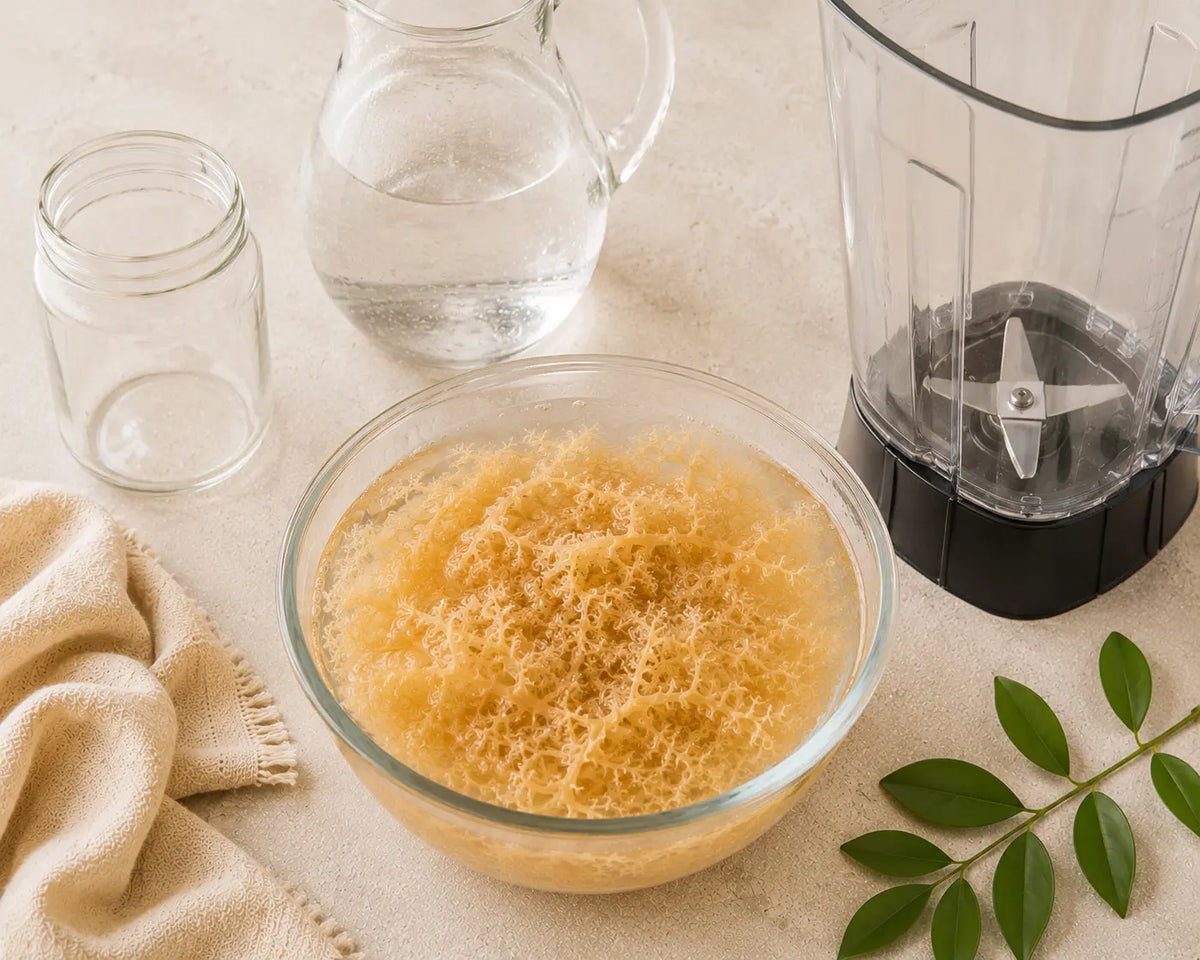
Making sea moss gel at home is a simple process, but it does take a little time and care.
If you are using dried sea moss, you will need to rinse it properly, soak it until it softens, then blend it with clean water until smooth.
It is not difficult. It is just one of those kitchen tasks where rushing does not help. Sea moss comes from the ocean, so a quick rinse and “that’ll do” is not the vibe.
This guide walks you through how to make sea moss gel at home, how to store it safely, and when ready-made gel might be the easier option.
What is sea moss gel?
Sea moss gel is made by soaking dried sea moss and blending it with water until it becomes smooth and jelly-like.
Once prepared, it can be added to smoothies, juices, oats, teas, soups, sauces and other everyday recipes.
It is popular because it is versatile, mild in flavour, and easy to mix into foods and drinks you already enjoy.
What you need to make sea moss gel
You do not need many ingredients or tools.
Ingredients
- Dried sea moss
- Cold filtered or spring water for rinsing and soaking
- Fresh water for blending
Equipment
- A large clean bowl
- A sieve or colander
- A blender
- A clean airtight glass jar
- A clean spoon or tongs
Clean equipment matters. Once blended, sea moss gel is a fresh food product, so good hygiene from the beginning helps keep the finished gel fresher.
Step 1: Inspect the dried sea moss
Before soaking, take a moment to look over the dried sea moss.
Because sea moss is a natural seaweed, it may contain salt, sand, tiny shell pieces or natural sea debris. Some variation is normal, but anything that looks mouldy, rotten or unusually discoloured should not be used.
If it smells strongly unpleasant before you even start, trust your senses.
Step 2: Rinse the sea moss thoroughly
Place the dried sea moss in a large bowl and rinse it with cold water.
Use your hands to gently move it around and loosen any salt, sand or grit. Drain the water and repeat the process several times until the water looks much clearer.
This step is important. Nobody wants a smoothie with surprise sand.
Rinsing tips
- Use cold water rather than hot water
- Change the water several times
- Gently separate the strands as you rinse
- Remove visible bits of shell, sand or debris
- Do not rush the process
Step 3: Soak the sea moss
Once rinsed, place the sea moss in a clean bowl or container and cover it with fresh cold water.
The sea moss will expand as it soaks, so make sure there is enough room in the bowl and enough water to cover it properly.
Many people soak dried sea moss for around 12–24 hours, but this can vary depending on the product, how dry it is, and the supplier’s instructions.
Always follow the guidance provided with the dried sea moss if available.
Should you soak sea moss in the fridge?
You can soak sea moss in the fridge, especially if your kitchen is warm or you are soaking it for a longer period.
Keeping it chilled can help maintain freshness while it hydrates.
If you soak it at room temperature, avoid leaving it somewhere hot or exposed.
Step 4: Rinse again after soaking
After soaking, drain away the soaking water and rinse the sea moss again with clean water.
At this stage, the sea moss should feel softer, plumper and more gel-like.
It should not smell sour, rotten or unpleasant. If it does, do not blend it.
Step 5: Blend with fresh water
Add the soaked sea moss to a blender with fresh clean water.
Blend until smooth. The amount of water you add will affect the final texture:
- Less water creates a thicker gel
- More water creates a looser gel
Start with a smaller amount of water and add more gradually if needed. It is easier to loosen a thick gel than to rescue one that has become too watery.
Step 6: Transfer to a clean jar
Once blended, pour the sea moss gel into a clean airtight glass jar.
Seal the jar and place it in the fridge. The gel will usually thicken more as it chills.
Label the jar with the date if you want to keep track of when you made it.
How long does homemade sea moss gel last?
Homemade sea moss gel should be treated as a fresh product.
How long it lasts depends on how it was prepared, how clean the equipment was, how it is stored, and how often the jar is opened.
Because homemade gel does not have the same production controls or use-by guidance as a professionally made product, it is best to be cautious.
Keep it refrigerated, use a clean spoon every time, and do not use it if it smells, looks or tastes off.
Can you freeze homemade sea moss gel?
Yes, sea moss gel can often be frozen.
Freezing can be useful if you have made more than you can use quickly. You can freeze it in a clean airtight container or portion it into an ice cube tray for smoothies and drinks.
Freezing tips
- Use a clean freezer-safe container
- Freeze in small portions if possible
- Label with the date
- Thaw in the fridge when possible
- Do not repeatedly freeze and thaw the same portion
How to use homemade sea moss gel
Once your gel is ready, you can use it in the same way as ready-made sea moss gel.
Simple ways to use it
- Add 1 tablespoon to a smoothie
- Stir it into porridge or overnight oats
- Blend it into juice
- Mix it into herbal tea once the tea has cooled slightly
- Add it to soups, sauces or stews
- Use it in smoothie bowls or simple desserts
A common serving size is around 1–2 tablespoons per day, but always use sea moss sensibly and avoid the idea that more is automatically better.
Common mistakes to avoid
Not cleaning it properly
Dried sea moss needs thorough rinsing. If you skip this step, your gel may contain salt, sand or grit.
Using too much water when blending
Adding too much water can make the gel thin. Start small and add more if needed.
Using dirty containers or utensils
Clean equipment helps protect the freshness of the finished gel. Use clean bowls, jars, spoons and blender parts.
Leaving it out for too long
Sea moss gel should be kept refrigerated. Avoid leaving it out at room temperature for long periods.
Making more than you can use
Homemade gel is fresh, so make an amount that suits your routine. If you make too much, consider freezing some.
How can you tell if homemade sea moss gel has gone bad?
Do not use homemade sea moss gel if you notice:
- A sour, rotten or unpleasant smell
- Visible mould
- Unusual bubbling or pressure in the jar
- A dramatic colour change
- A strange or unpleasant texture
- A taste that seems off
If you are unsure, throw it out. Fresh food safety is not the place to be brave.
Is homemade sea moss gel better than ready-made gel?
Not necessarily. It depends on what matters most to you.
Homemade gel gives you control over the preparation process. You can choose the dried sea moss, rinse it yourself, decide the texture and make it in the amount you need.
Ready-made gel is more convenient. It saves time, reduces mess and means you do not have to clean, soak and blend sea moss yourself.
Neither option is automatically better. The right choice depends on your routine.
Homemade gel may suit you if:
- You enjoy preparing ingredients from scratch
- You already buy dried sea moss
- You want to control the texture
- You have time to rinse, soak and blend it properly
Ready-made gel may suit you if:
- You want something quick and easy
- You do not want to clean or soak dried sea moss
- You prefer a ready-to-use jar
- You want to add it straight to smoothies, oats or drinks
Medical disclaimer
This article is for general information only and is not medical advice. Sea moss may not be suitable for everyone. If you are pregnant, breastfeeding, taking medication, managing a health condition, using iodine supplements, or unsure whether sea moss is right for you, speak to a qualified healthcare professional before using it regularly.
Final thoughts
Making sea moss gel at home is simple once you understand the steps: rinse, soak, rinse again, blend and refrigerate.
The most important parts are cleaning it properly, using clean equipment and storing the finished gel safely.
If you enjoy making things from scratch, homemade sea moss gel can be satisfying. If you would rather skip the preparation, ready-made sea moss gel is a convenient way to use sea moss without turning your kitchen into a seaweed prep station.