
Articles
Black Seed Oil: What It Is, How It's Used, and What to Look For
By Leanne & Tashan · Published
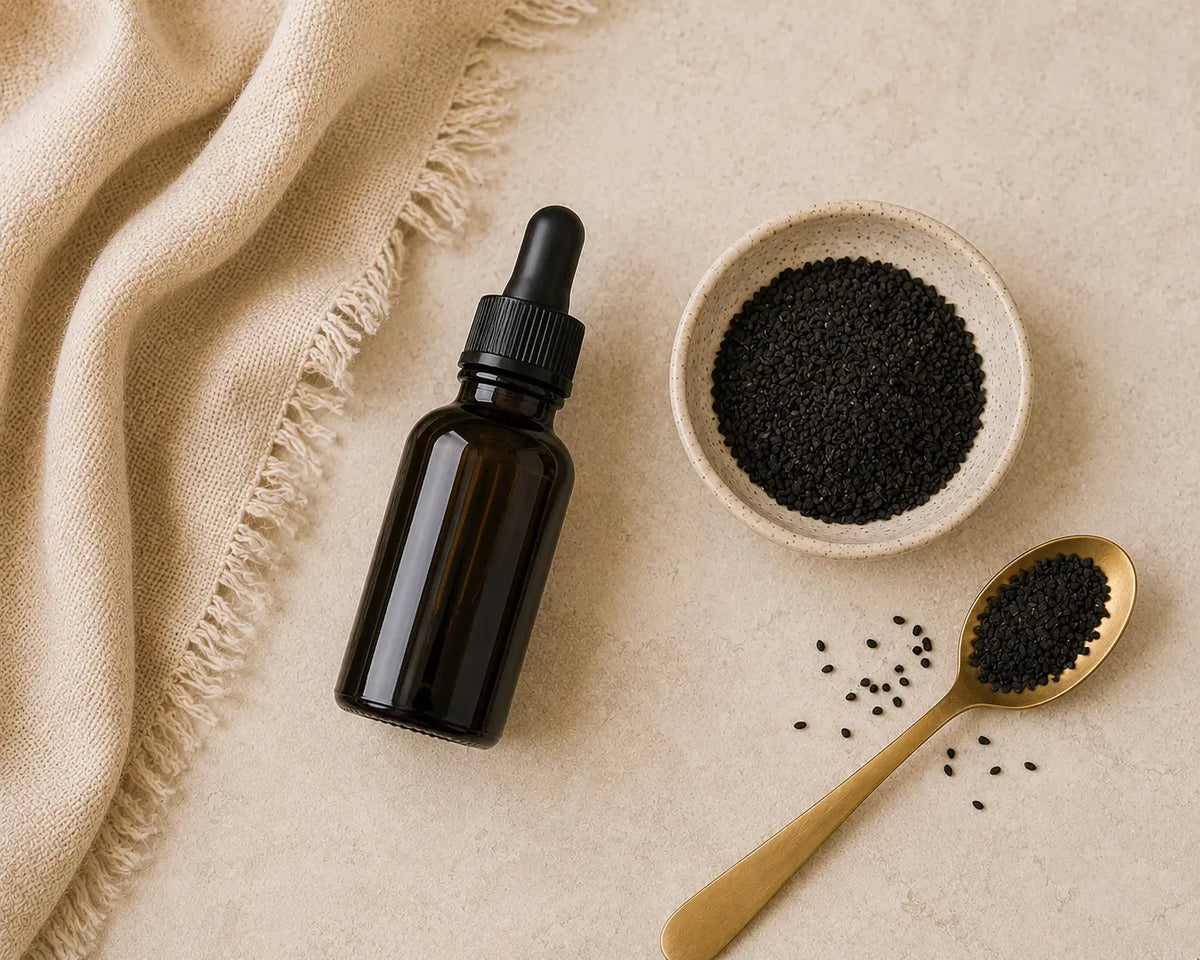
Black seed oil has quietly become an ingredient that keeps popping up in wellness conversations. It has a long history in cooking and recently has found its way into supplement routines, skin care, and hair care.
If you have seen it online and wondered what it is, this guide covers the basics: what it is, how people use it, what to look for when buying, and how to approach it with realistic expectations.
What is black seed oil?
Black seed oil is made from the seeds of the Nigella sativa plant. The seeds are small and dark and may also be called black cumin seeds or kalonji. They have been used in cooking across South Asia, the Middle East, and North Africa for a long time.
The oil is usually sold as a liquid or in capsule form, and some people use it topically on the skin or hair.
What are all the different names for?
Black seed oil, black cumin seed oil, black caraway oil, kalonji oil — the names can make it sound more complicated than it is. They often refer to the same thing: oil from the Nigella sativa plant.
If you are ever unsure, check the ingredient list on the product. The botanical name Nigella sativa should be listed somewhere if that is what is in the bottle.
What does it taste like?
Strong. That is the short answer.
Black seed oil is often described as earthy, peppery, slightly bitter, and herbal. Some people take it straight from a spoon. Others find the flavour intense and prefer capsules. If you are sensitive to bold flavours, capsules are worth considering from the start.
How do people use black seed oil?
There is no single way people use it. Common approaches include:
- Taking it as a liquid oil by the spoon or stirred into food or drink.
- Taking it in capsule form.
- Applying it topically to the skin.
- Using it in hair routines, either on its own or mixed into other oils.
- Cooking with the whole seeds, which are a kitchen staple in many households.
How you use it depends on the product and your reason for using it. Always follow the product label guidance rather than dosage advice found on random corners of the internet.
Where it comes from and how it is pressed
Nigella sativa is a small flowering plant that produces pods full of tiny, angular, matt-black seeds. Crushed between your fingers they smell warm and peppery, somewhere between oregano, cumin and toasted onion seed.
The best oils are cold pressed, meaning the seeds are pressed mechanically without added heat, then filtered. Cold pressing gives a dark, slightly cloudy oil with a pronounced peppery bite. Heat-extracted or refined oils tend to be paler, thinner and much milder in flavour, which is often a clue about how the bottle was produced.
In the kitchen the seeds are used far more widely than the oil: scattered over naan and flatbreads, stirred into dals and pickles, folded into Middle Eastern cheeses and breads, or toasted briefly in oil at the start of a curry. The oil itself is strong enough that most people use it by the teaspoon, drizzled over food after cooking rather than fried, or blended into a gel, smoothie or yoghurt where its pepperiness is softened by something sweet or creamy.
Black seed oil is an interesting ingredient with a genuine culinary history behind it. It is not a cure-all, and any brand suggesting otherwise is worth approaching with scepticism.
How does it fit into a general wellness routine?
Some people include black seed oil as one part of a wider wellness routine, sitting alongside things like eating well, staying hydrated, sleeping properly, and moving regularly.
It can be a considered addition to that routine, but works best when expectations are grounded. A single ingredient, however long it has been in the kitchen cupboard, rarely does all the heavy lifting — which is much the same point we make about the word “superfood”.
Can it be used on skin or hair?
Black seed oil is used in some skin and hair routines, either on its own or as part of a blended product, in much the same way as other conditioning oils.
That said, it does not suit everyone's skin. Cleveland Clinic notes some people have reported rashes or allergic reactions after using black seed oil, both topically and orally. A patch test before wider use is sensible, and if you notice redness, itching, or irritation, stop using it.
What should you look for when buying it?
Quality matters with any supplement or oil. Check these before you buy:
- The full ingredient list.
- The botanical name, Nigella sativa, somewhere on the label.
- Whether it is cold pressed, and whether that is stated clearly.
- Whether it is liquid oil or capsules, and what suits you.
- Clear serving or usage guidance.
- Storage instructions.
- Whether the product has been independently tested.
- Any allergen or suitability information.
- Whether the brand makes realistic rather than extravagant health claims.
If a product promises to cure, treat, or reverse a medical condition, that is a reason to slow down and read more carefully.
Who should check with a doctor first?
Black seed oil may not be suitable for everyone. It is worth speaking to a qualified healthcare professional before using it regularly if you:
- Are pregnant or breastfeeding.
- Take any medication, particularly for blood pressure, blood sugar, blood thinning, or immune conditions.
- Have liver or kidney concerns.
- Have a bleeding disorder or are due to have surgery.
- Have allergies or sensitive skin.
- Are already using several supplements regularly.
This is not a reason to be alarmed. It is a reminder that personal health context matters and supplements can sometimes interact with medication or existing conditions.
Can it be combined with sea moss?
Some people include both black seed oil and sea moss in their wellness routine, which is not unusual. They are completely different ingredients. Sea moss is a seaweed often taken as a gel or capsule, while black seed oil is a botanical oil with its own considerations. In a blended gel the two balance each other out, with the sweetness and mild flavour of the gel taking the edge off the oil's pepperiness.
Neither is automatically better than the other. They serve different purposes and suit different routines — the same conclusion we reach when we set sea moss against shilajit. If you use several supplements together, especially if you take medication or manage a health condition, check that everything you take is appropriate for you.
How should it be stored?
Follow the product label instructions. Most oils do best sealed, away from direct sunlight, heat, and moisture. If the oil smells off or is past its use-by date, do not use it.
A note on medical information
This article is for general information only and is not a substitute for medical advice. Black seed oil may not be suitable for everyone and may interact with medications or existing health conditions. If you are pregnant, breastfeeding, taking medication, or managing a health condition, please speak to a qualified healthcare professional before using it.
Final thoughts
Black seed oil is a kitchen ingredient with a long history, a strong flavour, and a place in some wellness routines. It can be used in different ways depending on what suits you, but is best approached with clear expectations and common sense.
Look for products with honest labelling, clear usage guidance, and quality testing where possible. And if a brand's claims sound too good to be true, trust that instinct.