
Articles
Sea Moss and Psoriasis: What to Know Before You Try It
By Leanne & Tashan · Published
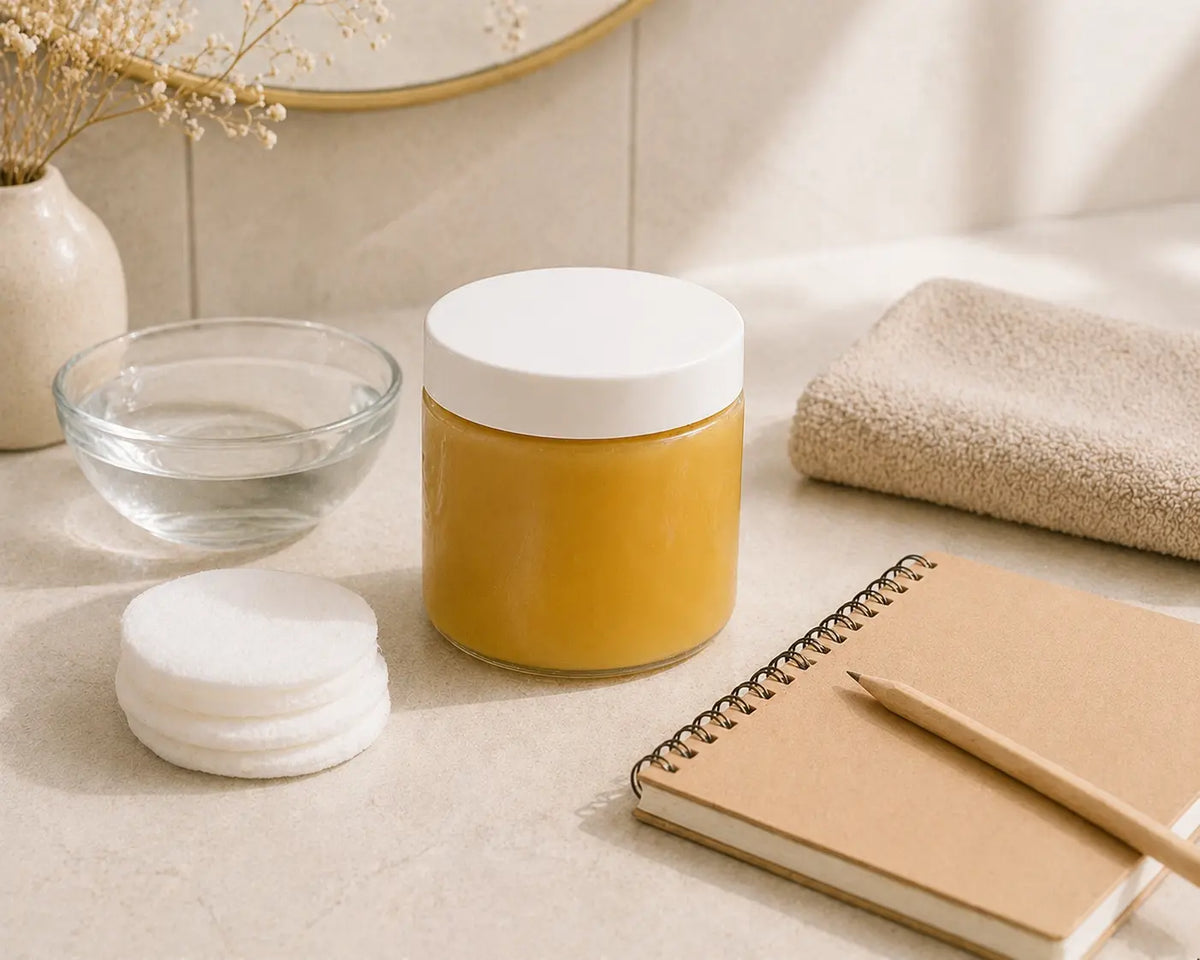
If you have psoriasis, you have probably seen plenty of online claims that sea moss can “help” it, “clear flare-ups”, or even “heal the skin”. When you are dealing with sore, itchy or flaky patches, those kinds of words can be genuinely comforting.
But psoriasis is a medical condition, and it deserves more than a wellness trend and a hopeful headline.
This article explains what psoriasis actually is, why caution matters when you see strong natural remedy claims, and how to approach sea moss for skin sensibly if you have sensitive skin.
What is psoriasis?
Psoriasis is a long-term inflammatory skin condition. It can cause dry, itchy, sore, flaky patches — often with a silvery scale — and it tends to come and go unpredictably.
It is not infectious, so you cannot catch it from someone else. And while it cannot be cured, treatments can help manage symptoms effectively.
Why strong “natural cure” claims need caution
When your skin is uncomfortable or affecting your confidence, it is easy to feel drawn to natural solutions — especially ones that sound simple and safe.
The issue is that psoriasis is not just dry skin. It is an immune-mediated inflammatory condition that can vary hugely in severity. It may need proper diagnosis, ongoing monitoring, and prescribed treatment.
Sea moss is not a cure or treatment for psoriasis. There is not enough evidence to suggest it helps psoriasis in any meaningful clinical sense, and framing it that way would be misleading. What it might offer — in some cases, for some people — is a simple, plain ingredient that feels moisturising as part of a careful skincare routine. That is very different from treatment.
Do not put sea moss gel on affected skin
This one is straightforward: affected patches are not the place to experiment.
Some people like using plain sea moss gel on their skin because it can feel cool and moisturising. However, psoriasis patches can be sore, cracked, inflamed or highly sensitive, and applying any new ingredient to affected skin carries a real risk of irritation. We would not recommend it.
Please avoid applying sea moss gel to skin that is:
- Broken, cracked or bleeding.
- Actively inflamed or very sore.
- Showing signs of infection.
If in doubt, speak to your GP, pharmacist or dermatologist before trying anything new on affected areas.
What about using it as a face or body mask?
If your skin is calm, not actively irritated, and you would like to try plain sea moss gel as a rinse-off mask, a patch test first is always a sensible step.
How to patch test
- Apply a small amount of plain sea moss gel to a discreet patch of skin — the inner arm or the back of the ear works well.
- Leave it for a short while, then rinse off.
- Wait 24 hours and check for any redness, itching, burning or swelling.
- If your skin reacts at all, do not continue.
One thing to note: only use plain sea moss gel on the skin. Flavoured varieties — with fruit, honey, spice or other additions — are made for eating, not for applying to sensitive patches.
Eating sea moss will not manage a skin condition
Sea moss can be part of a balanced diet, but it should not be framed as a psoriasis remedy.
Psoriasis is influenced by a wide range of factors: genetics, immune activity, stress, infections, certain medications, skin injury, smoking, alcohol, and general health. A good diet and a consistent routine matter for lots of reasons, but no single food is going to manage a medical skin condition.
What treatments are actually used for psoriasis?
Treatment for psoriasis depends on its type, location and severity. According to the NHS and the British Association of Dermatologists, options typically range from topical creams and ointments for milder cases, through to light therapy, tablets or injectable treatments for more severe forms.
The right approach will depend on your individual situation, which is why getting proper medical advice matters.
What to avoid putting on psoriasis-prone skin
Psoriasis-prone skin can be reactive, so it is worth being careful about what you apply. In general, avoid:
- Old or spoiled sea moss gel.
- Flavoured sea moss gel, which is meant for eating, not skin.
- Sea moss mixed with lemon juice, strong essential oils or harsh exfoliants.
- Anything abrasive on plaques.
- Stopping or swapping prescribed treatments without speaking to a professional first.
When to speak to a doctor
If you think you might have psoriasis — or your current symptoms are getting worse — it is worth getting proper advice rather than experimenting with skincare alone.
In particular, seek medical advice if:
- Your skin is painful, cracked, bleeding or showing signs of infection.
- Psoriasis is affecting your sleep, mood or day-to-day confidence.
- Large areas of your skin are involved.
- Your scalp, face, hands, feet or genitals are affected.
- You have joint pain, stiffness or swelling alongside your skin symptoms.
That last point is especially important. Some people with psoriasis develop psoriatic arthritis, which can cause joint pain, stiffness or swelling and needs its own assessment and treatment.
Where we stand
At Millie's Moss, we want to be straightforward with you: sea moss is not a treatment for psoriasis, and we would not want you to use it as one.
Plain sea moss gel may suit some people as a simple, gentle skincare ingredient — but if you have psoriasis, the most important thing you can do is work with a healthcare professional who knows your skin and your history.
Medical disclaimer
This article is for general information only and is not medical advice. Sea moss should not be used to diagnose, treat, cure or prevent psoriasis or any other skin condition. If you have psoriasis or suspect you might, or if you have broken, inflamed or infected skin, please speak to a GP, pharmacist or dermatologist before making any changes to your routine.